
OTWONO LABS / NOTEBOOK
Separate observation and explanation
Learn one step at a time, with examples, practice and a place for your questions.
Start this lessonOriginal introductory guide from OTWONO Labs. The diagram is illustrative, not a reported research result.
Start with a description
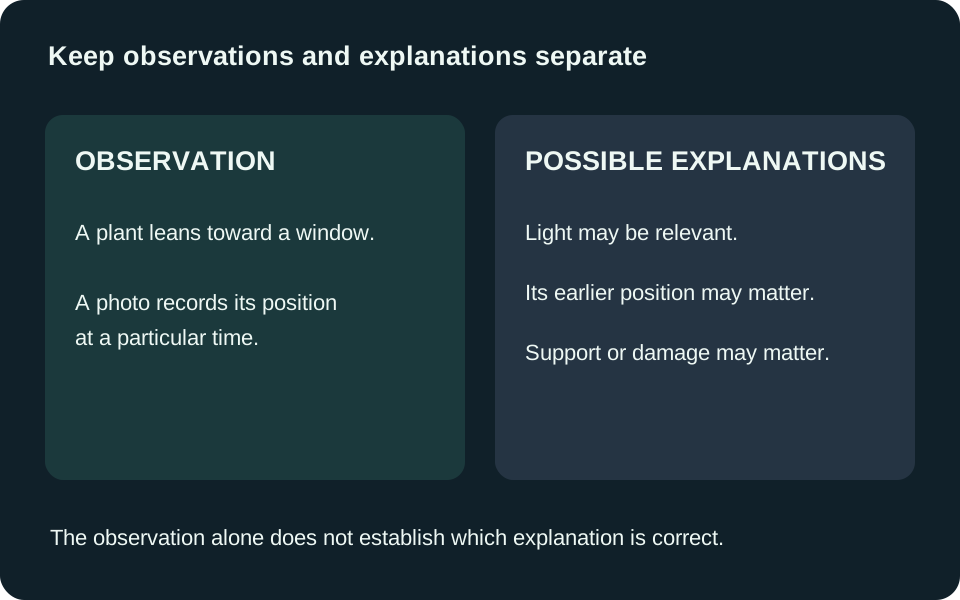
In the illustrative example, a plant leans toward a window. That describes a position. It does not by itself explain how the plant arrived in that position.
Label your inference
You might suspect light is relevant. Write this as a possible explanation rather than silently adding it to the observation. Other information, such as the previous position or a damaged stem, could change your interpretation.
Ask what would distinguish the possibilities
Think about which additional observations would be useful. Earlier photographs or a record of how the plant was supported could help. An additional observation may narrow the possibilities without establishing a complete cause.
Avoid the opposite mistake
Keeping an explanation tentative does not mean all explanations are equally supported. Compare each with the available evidence and state the limits of what you know.
Try it
Describe something ordinary you noticed today in one sentence. Write two possible explanations separately. For each, name one piece of information that would help you evaluate it.